
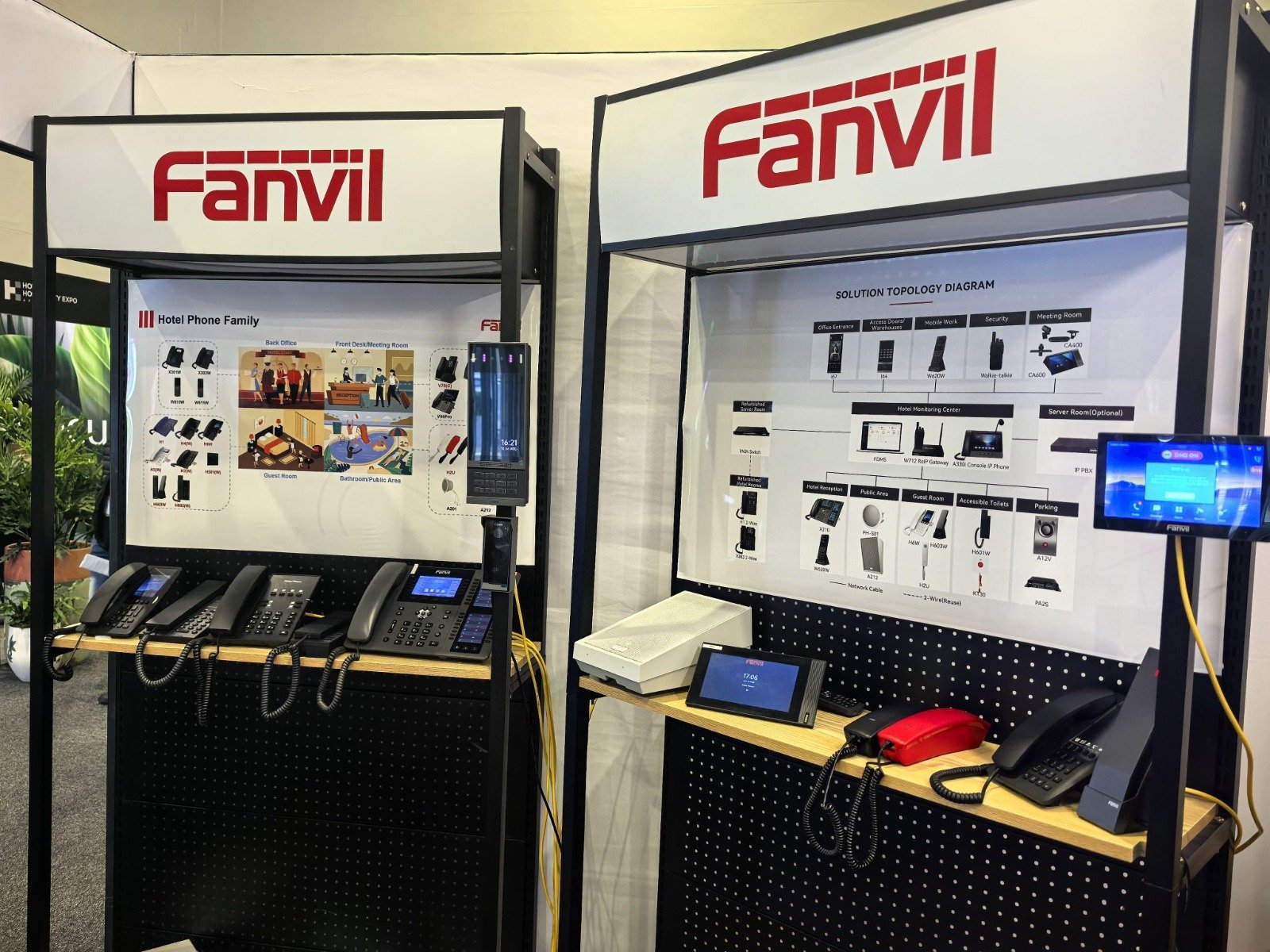
In today’s business environment, reliable communication is essential for connecting employees, customers, and teams.SIP phones, VoIP phones, and IP phones are commonly used communication solutions that help businesses make and receive calls over an internet or IP network.
Although these terms are often used interchangeably, they are not exactly the same. Understanding the difference can help businesses choose the right phone system according to their communication requirements, budget, and infrastructure.
What Is a SIP Phone?
A SIP phone is a telephone that uses the Session Initiation Protocol (SIP) to establish, manage, and terminate voice or video calls over an IP network.
SIP phones can connect with an IP-PBX or hosted business phone system and commonly support features such as:
- HD voice calling
- Call transfer
- Call forwarding
- Conference calling
- Voicemail
- Auto-attendant
- Multiple SIP accounts
- PoE connectivity
- Business directory integration
Example:
A company with 50 employees can install SIP phones at each employee’s desk and connect them to an IP-PBX. Employees can then call each other using extensions without requiring separate traditional telephone lines.
What Is a VoIP Phone?
VoIP (Voice over Internet Protocol) is a technology that allows voice calls to be transmitted over an internet or IP network instead of traditional telephone networks.
A VoIP phone can be a physical desk phone, software-based application, or another device capable of making calls through an IP network.
Businesses use VoIP because it can provide flexible communication while supporting features such as:
- Internet-based calling
- Call routing
- Video calling
- Conference calling
- Voicemail
- Mobile integration
- Call recording
- Business phone numbers
Example:
A company with offices in Delhi, Mumbai, and Bangalore can use a cloud-based VoIP system so employees in all three locations can communicate through the same business phone system.
What Is an IP Phone?
An IP phone is a telephone designed to make calls through an IP network rather than a traditional analog telephone line.
IP phones are widely used in offices, call centers, hotels, hospitals, educational institutions, and other organizations.
Typical IP phone features include:
- Ethernet connectivity
- SIP support
- HD audio
- PoE
- Call transfer
- Call forwarding
- Conference calling
- Multiple programmable keys
- LCD display
example
a business can connect an IP phone to its office network using an Ethernet cable and register it with its IP-PBX or hosted phone service.
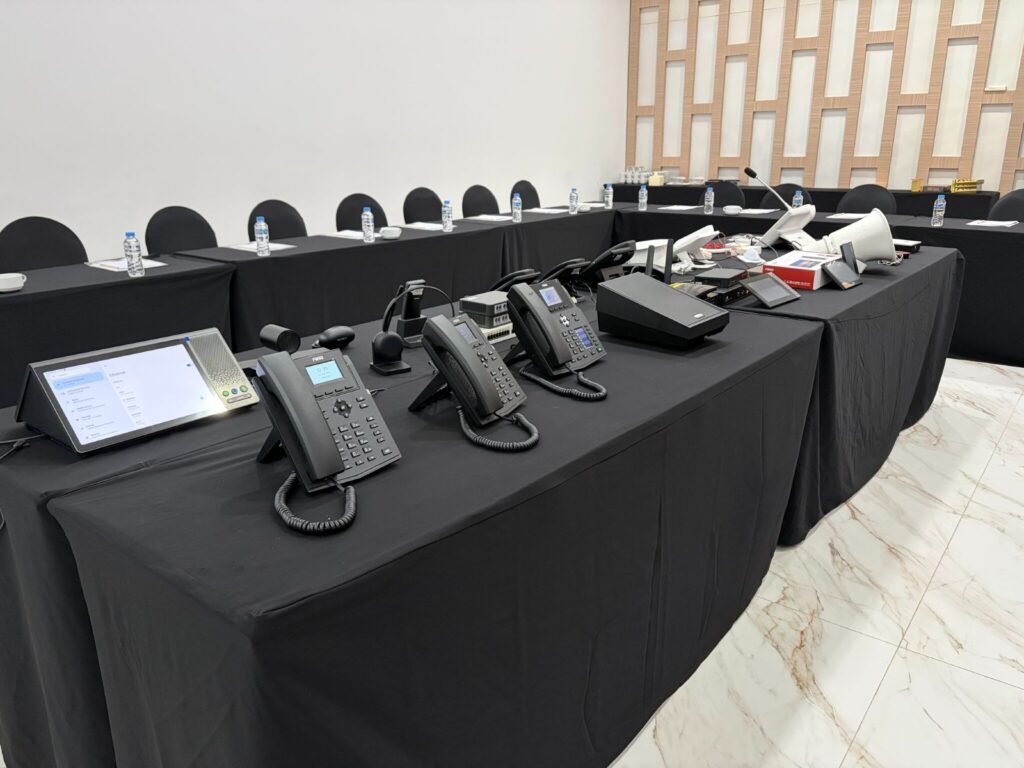
SIP Phone vs VoIP Phone vs IP Phone
The easiest way to understand the difference is:
| Term | Meaning | Main Purpose |
|---|---|---|
| SIP Phone | A phone that uses SIP for communication | Making and managing IP-based calls |
| VoIP Phone | A phone/device used for voice communication over IP | Internet/IP-based calling |
| IP Phone | A physical phone that works over an IP network | Business voice communication |
In practical business environments, these terms often overlap. Many modern IP phones are SIP-based VoIP phones.
How Do SIP, VoIP, and IP Phones Work Together?
A typical business communication setup can look like this:
IP Phone → Network Switch → Internet/LAN → IP-PBX or Cloud PBX → Customer/Employee
For example, suppose ABC Technologies has 30 employees.
The company can install SIP-compatible IP phones on employees’ desks. These phones connect to the company’s network and register with an IP-PBX or cloud communication platform.
When an employee makes a call:
- The employee enters the phone number.
- The SIP phone sends the call request.
- The IP-PBX or VoIP platform processes the call.
- The call is routed through the appropriate network.
- The recipient answers the call.
- Voice communication takes place over the IP network.
This setup can make it easier for businesses to manage extensions, call routing, users, and other communication features from a centralized system.
Benefits of SIP and IP Phones for Businesses
1. Cost-Effective Communication
Businesses can reduce communication costs by using IP-based calling instead of relying entirely on traditional telephone infrastructure.
2. Easy Scalability
Adding new employees can be relatively simple. A business can add new extensions and phones without installing a separate traditional phone line for every employee.
3. Advanced Calling Features
Modern IP phone systems can provide features such as:
- Call forwarding
- Call transfer
- Auto attendant
- Conference calls
- Voicemail
- Call recording
- BLF
- Speed dial
4. Remote Working Support
Cloud-based VoIP systems can allow employees to communicate from different locations using supported phones, computers, or mobile applications.
5. Centralized Management
Businesses can manage extensions, users, phone configurations, and call routing through an IP-PBX or cloud-based platform.
Real-World Example
Consider ABC Enterprises, which has 100 employees.
Previously, the company used a traditional telephone system. As the company expanded, adding new extensions became more complicated.
The company switches to a SIP-based IP phone system.
The new setup includes:
- 100 SIP IP phones
- 1 IP-PBX or cloud PBX
- PoE network switches
- Business internet connection
- SIP accounts/extensions
Now employees can call each other using extensions such as 101, 102, 103, etc.
The company can also configure call forwarding, conference calling, voicemail, auto-attendant, and other business communication features.
This is one reason why SIP and IP phone solutions are popular for modern business communication.
How to Choose the Right IP Phone?
Before purchasing an IP phone, businesses should consider:
Number of SIP Accounts
If users need multiple lines, choose a phone that supports the required number of SIP accounts.
Display
Consider whether you need a basic display, color screen, or touchscreen.
Audio Quality
For frequent business calls, look for features such as HD voice, wideband audio, and noise reduction.
PoE Support
Power over Ethernet can allow the phone to receive power and network connectivity through a single Ethernet cable.
Wi-Fi and Bluetooth
These features can be useful for employees who need wireless connectivity or Bluetooth headsets.
Conference Requirements
Businesses that frequently conduct conference calls may benefit from phones with dedicated conference features.
Compatibility
Always check compatibility with your IP-PBX, hosted PBX, or VoIP service provider before purchasing.
Why Choose Dinstar for SIP and IP Phone Solutions?
Dinstar provides a range of business communication solutions, including IP phones, VoIP gateways, IP-PBX solutions, and other unified communication products.
For businesses looking to build or upgrade an IP-based communication system, selecting compatible and reliable equipment is important. Dinstar solutions can be considered for offices, enterprises, call centers, hotels, and other business environments.
For example, a company can combine Dinstar IP phones with an IP-PBX and VoIP gateway to create a complete business communication environment.
Branding example for your blog:
Looking for reliable SIP and IP phone solutions for your business? Dinstar offers professional VoIP and communication solutions designed for modern business communication. Contact Dinstar or an authorized Dinstar partner to find the right solution for your requirements.
Frequently Asked Questions (FAQ)
1. Is a SIP phone the same as an IP phone?
Not exactly. SIP is a communication protocol, while an IP phone is a physical telephone that communicates over an IP network. Most modern SIP phones are IP phones.
2. Is SIP part of VoIP?
Yes. SIP is one of the commonly used protocols for establishing and managing VoIP calls.
3. Can an IP phone work without the internet?
Yes, depending on the setup. IP phones can communicate within a local network using an IP-PBX without requiring the public internet. Internet connectivity is generally required for external internet-based calling.
4. What is better: SIP or VoIP?
They are not direct alternatives. VoIP is the technology for transmitting voice over IP networks, while SIP is a protocol commonly used to establish and manage those calls.
5. Are SIP phones good for businesses?
Yes. SIP phones can be useful for businesses that need features such as extensions, call transfer, conference calling, multiple lines, and centralized phone management.
6. Can SIP phones be used with an IP-PBX?
Yes. SIP phones are commonly registered with compatible IP-PBX systems to provide business calling and extension-based communication.
7. Do IP phones need a special network?
They require an IP network, typically through Ethernet or Wi-Fi depending on the phone model. For business deployments, network configuration and quality are important for reliable voice communication.
8. Can SIP phones support remote employees?
Yes, when the phone system and network are configured to support remote registration or cloud-based communication.
Conclusion
SIP, VoIP, and IP phones are closely connected but represent different concepts. VoIP refers to voice communication over IP networks, SIP is a protocol commonly used to establish and manage those calls, and an IP phone is a physical device designed to communicate over an IP network.
For businesses, choosing the right solution depends on factors such as number of users, required features, PBX compatibility, network infrastructure, scalability, and budget.
If you’re planning to upgrade your business communication system. a properly designed SIP/IP phone solution can provide a flexible and scalable foundation for modern voice communication.
SEO keywords naturally covered: SIP phones, VoIP phones, IP phones, SIP phone vs VoIP phone, IP phone system, business IP phones, SIP IP phones, VoIP phone system, IP-PBX, business communication solutions.